Dental Handpiece Bearing Types: Ceramic vs Steel (Engineer Guide)
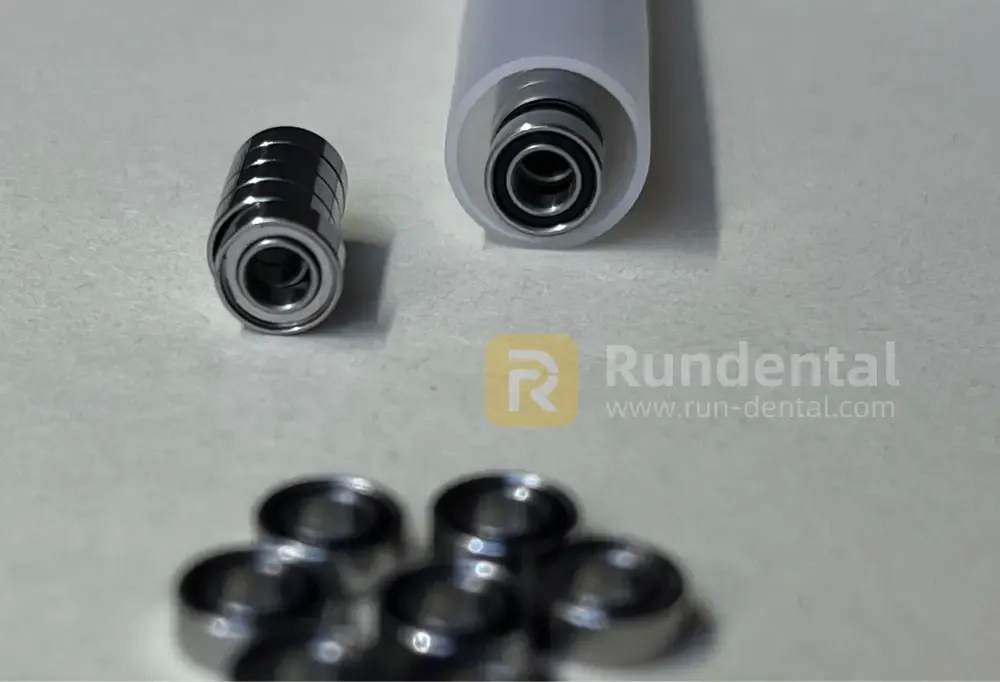
Ceramic or steel bearings in a dental handpiece? This engineer's guide breaks down material differences, speed behavior, lifespan, and cost — plus how to tell which one is actually inside your turbine.
Nobody buys a handpiece because of its bearings. Yet the entire instrument lives or dies at those tiny steel or ceramic balls spinning at up to 400,000 RPM. Skimp on the bearing, and you will be rebuilding cartridges every few months.
This guide is written for engineers, service technicians, and buyers who want to know exactly what differs between ceramic and steel bearings before they spec their next dental handpiece — not after the first repair bill lands. If your job is keeping turbines running rather than picking brands, the dental technician angle throughout this post is the one that matters. Think of it as a straight product comparison without the marketing fog.
Why Bearings Matter More Than You Think
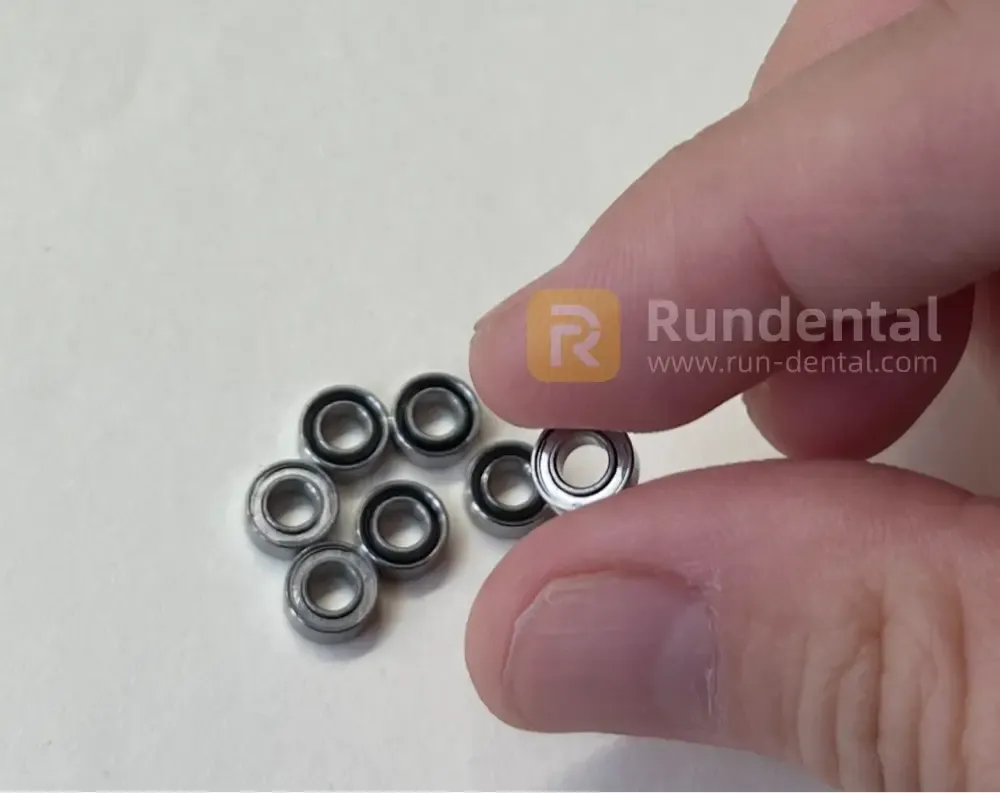
A high-speed air turbine spins at roughly 350,000–400,000 RPM in normal operation. At that speed the bearing stops behaving like a wheel and starts behaving like a gyroscope. The centrifugal force on each rolling element is no longer trivial — a tiny steel ball experiences a load many times its own weight, with every rotation, every single second.
That is where the material choice stops being trivia and becomes a lifespan decision. Lighter rolling elements shed heat, spin up faster, and put less stress on the race. Harder rolling elements wear down slower. Both of those facts point one direction — toward ceramic.
For a refresher on how the whole turbine works in the first place, this post on the working principle of high-speed dental handpieces covers the mechanics behind the rotor.
The Two Contenders: Ceramic vs Steel
Ceramic Bearings
The ceramic balls in dental bearings are almost always silicon nitride (Si₃N₄) — not alumina, which is cheaper but brittle and simply not suited to these speeds. Silicon nitride is the engineering ceramic that makes sense here, and here is why:
- Roughly 60% lighter than steel (density ≈3.2 g/cm³ vs ≈7.8 g/cm³). Lighter rolling elements mean less centrifugal force at speed, less heat buildup, and noticeably faster spin-up.
- Significantly harder (around 1500 HV vs roughly 700 HV for bearing steel). Harder surfaces wear slower, which is exactly what you want at half a million RPM.
- Lower thermal expansion (≈3 ppm/°C vs ≈12 ppm/°C). The bearing clearance stays stable as the handpiece heats up, instead of tightening as everything expands.
- Lower coefficient of friction, which keeps running temperatures down and stretches the life of the lubricant.
The trade-offs are real too: ceramics are brittle under shock loads, so a hard drop is more likely to chip or crack a ceramic ball than a steel one. And ceramic balls cost more to produce.
Steel Bearings
Steel bearings — typically 52100 bearing steel, known in China as GCr15 — have carried dental turbines for decades, and they still do the job well:
- Tough and forgiving. Steel shrugs off shock loads and the occasional drop far better than ceramic.
- Cheaper. Both to manufacture and to replace during a cartridge rebuild.
- Mature manufacturing process. The grinding, heat treatment, and raceway tolerances are fully worked out across virtually every supplier.
The trade-offs: steel is heavier, so at extreme speeds the extra mass generates more heat and vibration. It also expands more when hot, which can squeeze the internal clearance on long-running procedures.
Ceramic vs Steel: Side-by-Side
| Property | Ceramic (Si₃N₄) | Steel (52100 / GCr15) |
|---|---|---|
| Density | ≈3.2 g/cm³ | ≈7.8 g/cm³ |
| Hardness | ≈1500 HV | ≈700 HV |
| Thermal expansion | ≈3 ppm/°C | ≈12 ppm/°C |
| Centrifugal load at 400k RPM | Low | High |
| Drop / shock resistance | Brittle, can chip | Tough |
| Manufacturing cost | Higher | Lower |
| Typical life in high-speed use | Longer | Shorter |
| Best suited for | High-speed air turbines | Economy lines, low-speed, contra angles |
The Hybrid Option You Should Know About
Here is a detail most marketing pages skip: many handpieces sold as "ceramic bearing" models are actually hybrid bearings — steel inner and outer races with ceramic balls.
That is not a bad thing. In fact, it is often the engineering sweet spot. You get the low-mass, low-friction ceramic balls where they matter most — the rolling element — while the races stay tough, cheap, and replaceable. If a supplier quotes you a "ceramic bearing" handpiece, ask straight up whether it is full-ceramic or hybrid. Both are legitimate; they are just not the same product.
How to Tell Which Bearing Is in Your Handpiece
You do not need to tear the cartridge open to get a good answer:
- Listen. Spin the turbine and release the air. Ceramic bearings tend to run quieter and coast noticeably longer after the drive air cuts out.
- Check the spec sheet. The bearing material (Si₃N₄ ceramic vs steel) should be stated. If it is not, treat that as a red flag.
- Check the temperature. After a steady run, a ceramic-bearing head runs cooler to the touch.
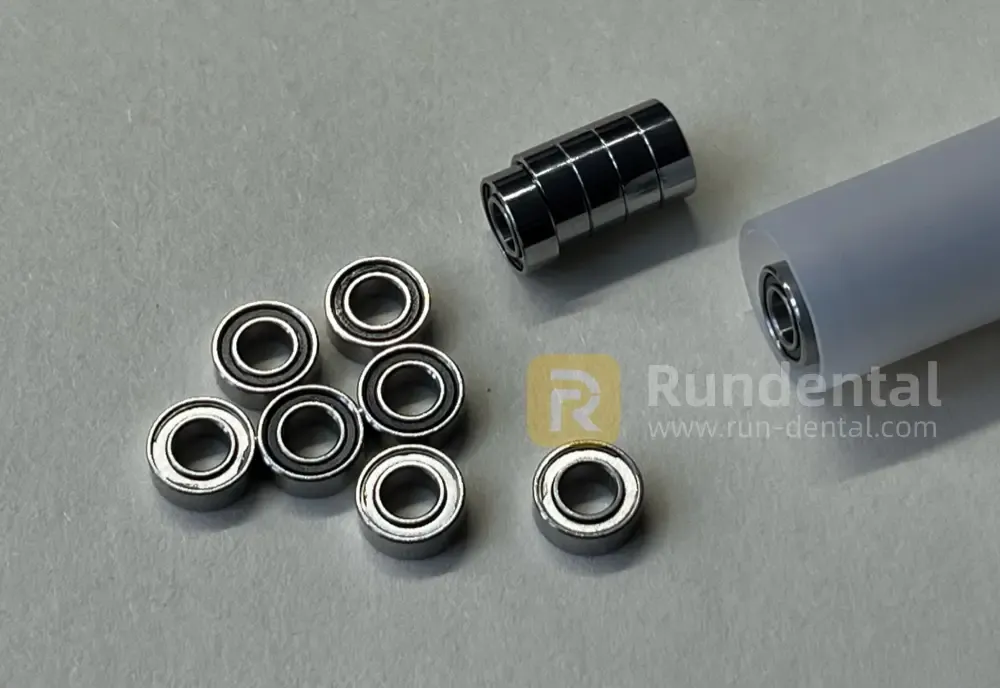
- Inspect the balls during a rebuild. Under magnification, ceramic balls are dark grey to black; steel balls are bright silver.
- Price is a hint, not proof. A very low price point almost certainly means steel. But don't assume the reverse — premium price doesn't guarantee full-ceramic.
Buyer's note: "Ceramic" on the box tells you almost nothing by itself. Ask for the exact configuration — full-ceramic, hybrid (steel races + ceramic balls), or all-steel — plus the bearing grade. A reputable OEM factory shares that spec sheet without blinking.
When Bearings Fail — And the Warning Signs
Bearings rarely die silently. What you will notice first:
- Vibration or a chattering, rough sound at speed
- The handpiece head running noticeably hotter than before
- A drop in torque and top speed
- Gritty, uneven rotation when you spin the turbine by hand
Losing speed specifically? Check the rotation issue first, because it is usually bearing wear rather than an air-supply problem.
Once a bearing is gone, the right move is a cartridge swap or a bearing replacement — not the "keep using it and see" approach. When you do rebuild, follow the OEM spec: cartridge design, clearance, and preload all have to match, which is exactly why judging handpiece quality before you buy saves you headaches later. If you want the full run-down of what breaks and how to fix it, our earlier deep dive on dental handpiece bearing failure — 4 problems & 18 solutions walks through each failure mode step by step.
For rebuilds, a proper repair tools kit for dental air turbines and a set of maintenance tools for repairing high-speed handpieces cover the basics — the press tools alone will save you from bending more than just the cartridge.
Choosing the Right Bearing for Your Application
Run through this before you place an order:
- High-speed air turbines (350k+ RPM): ceramic or hybrid. This is where the lighter rolling elements pay for themselves.
- Economy / budget lines: steel is perfectly adequate, and it keeps the price where distributors need it.
- Low-speed handpieces and contra angles: steel is the standard, and there is little reason to pay for ceramic here.
- Repair / cartridge rebuilds: always match the OEM spec. Swapping bearing types without adjusting clearance is how you end up with a turbine that burns out in a month.
If you are comparing finished handpieces rather than loose bearings, take a look at the R5 Pro 5-LED turbine as a reference point for what a modern high-spec turbine ships with.