Dental High-Speed Handpiece: 9 Common Problems & Quick Fixes
Diagnose and fix 9 common dental high-speed handpiece faults fast, with daily maintenance tips and signs you need professional service.
Let's be honest: most of the time a high-speed handpiece "breaks," it isn't really broken. After years of handling after-sales support, we can tell you the majority of complaints trace back to everyday things — how the handpiece is operated, cleaned, lubricated, connected, or a tiny blockage that takes thirty seconds to clear. This guide collects the daily basics, the checks you should run before touching a single screw, and the nine faults we see most often, each with a down-to-earth fix. Whether you're a distributor training your customers or a dentist or nurse working chairside, keep it close for quick reference.
Important: Always follow the instructions that came with your specific handpiece. If a problem survives the basic fixes below, stop using the handpiece and contact the manufacturer or a qualified service technician.
Before You Start: The Routine Basics
A high-speed handpiece is a precision instrument, but its daily care isn't complicated. The rules of thumb below prevent most of the problems in this article before they even show up.
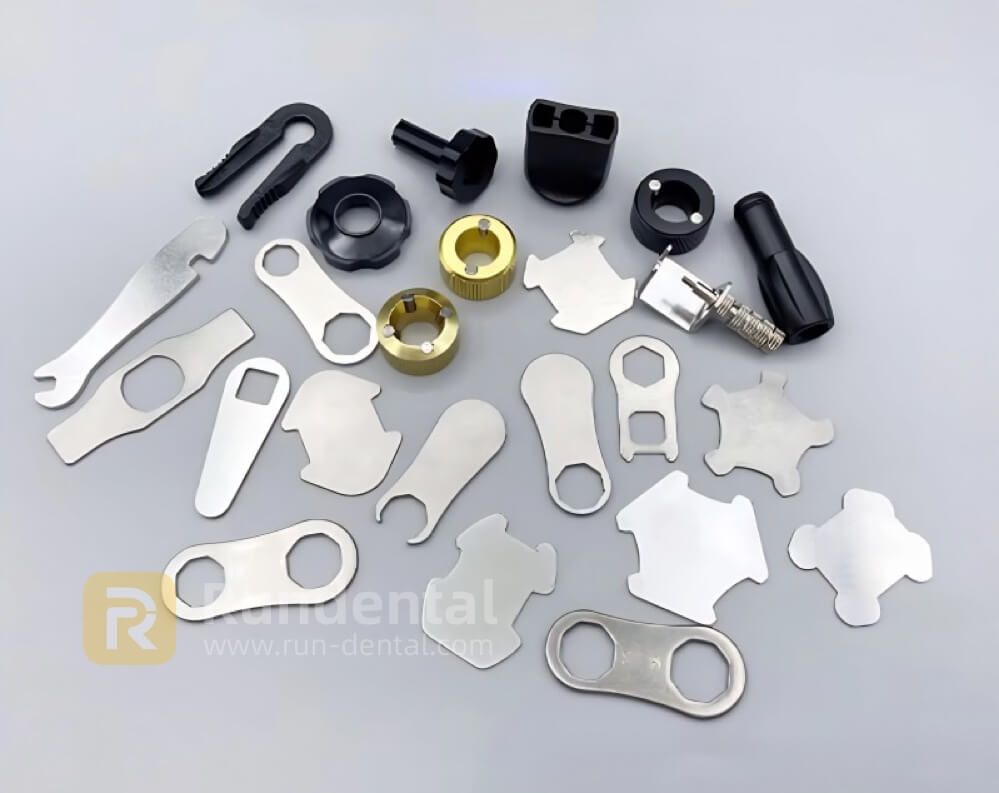
All disassembly, cartridge replacement, and maintenance should be done only with the recommended tools supplied with the product. A random screwdriver or oversized wrench can chew up the threads in seconds — which is exactly why every Rundental handpiece ships with its own original wrench, and why spare maintenance tools for dental high-speed handpieces (MTK-01) and a repair tools kit (RTK-01) are sold separately for clinics and dealers who service many units.
Cartridge Replacement
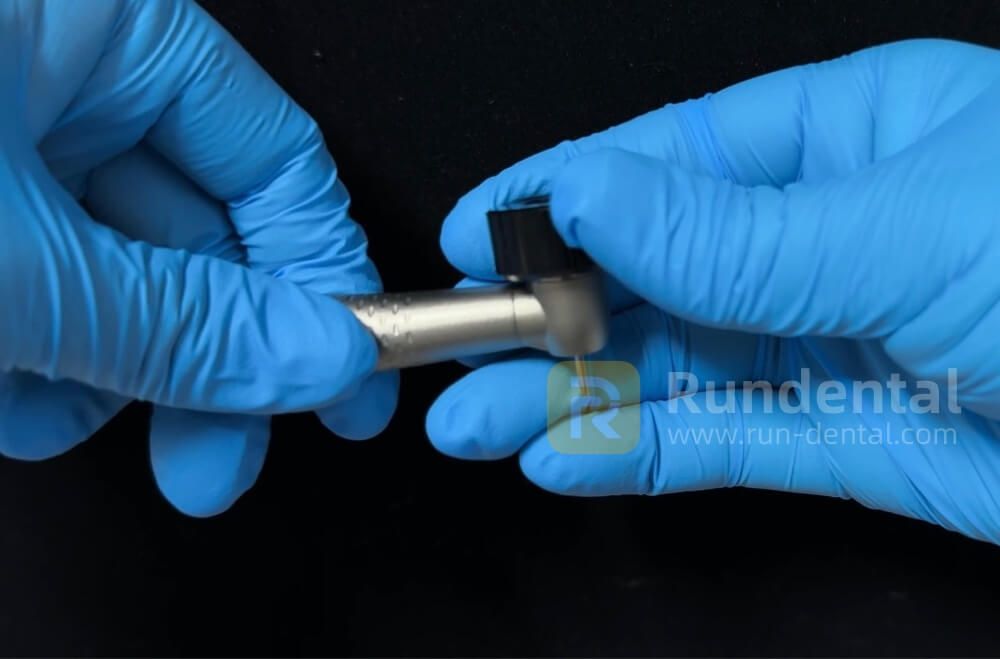
Use the matched original wrench to loosen the handpiece rear cap counterclockwise. Remove the old cartridge carefully, seat a compatible, qualified replacement cartridge correctly, and tighten the rear cap back up so the seal is snug.
Don't overtighten. Excessive force damages the threads or internal parts. Snug is enough — the O-ring does the sealing, not your muscles.
Run These Quick Checks Before You Disassemble Anything
Before you open the handpiece, spend one minute on these. Nine times out of ten, the cause is staring at you:
- Is the dental unit delivering enough air and water?
- Is the bur fully inserted and securely locked?
- Is the handpiece seated properly on the hose or coupler?
- Is the water spray normal when you step on the pedal?
- Was the handpiece lubricated as recommended after its last use?
- Was the handpiece used right after an air-polishing or sandblasting session?
The 9 Most Common Faults, Symptom by Symptom
If you'd rather scan than read, start with the table below, then jump to the matching section for the full fix.
| Symptom | Most Likely Cause | First Thing to Try |
|---|---|---|
| Weak or no water spray | Blocked spray nozzle or weak unit water | Clean the nozzle, check the unit's water supply |
| Blockage after air polishing/sandblasting | Powder trapped in the unit line | Flush the unit line 1–2 min before connecting the handpiece |
| Rotation feels weak | Low air pressure, dirty cartridge | Check air pressure & connection, then clean and lubricate |
| Handpiece won't rotate | Connection, drive air, or bur seating | Check hose + air, reseat the bur, clean and lubricate |
| Air or water leaking | Loose rear cap, loose fitting, worn O-ring | Tighten cap and connection, replace the O-ring if needed |
| Unusual noise | Lack of lubrication, worn bearing or cartridge | Stop, clean and lubricate, then inspect the cartridge |
| Head overheating | Weak coolant spray, worn bearing | Stop immediately, check spray, lubricate |
| Bur wobbles or falls out | Bur not locked, dirty or worn chuck | Reseat a standard bur, clean the chuck |
| Loose rear cap | Vibration or under-tightening | Retighten with the original wrench — don't overtighten |
1. Weak Water Spray or No Atomization
Possible causes
- Blocked spray nozzle or atomization holes
- Dental debris or calculus baked around the spray outlet
- Insufficient water supply from the dental unit
- Blockage inside the handpiece or waterline
Quick solution
Gently clear visible debris with the recommended cleaning needle, then flush the handpiece with clean water. If the spray is still weak or absent, check the dental unit's water supply and the hose connection. When spray holes stay stubborn, the full routine — including how to reach the nozzle from the head side — is covered in our guide on what to do when the water spray hole of the handpiece is blocked.
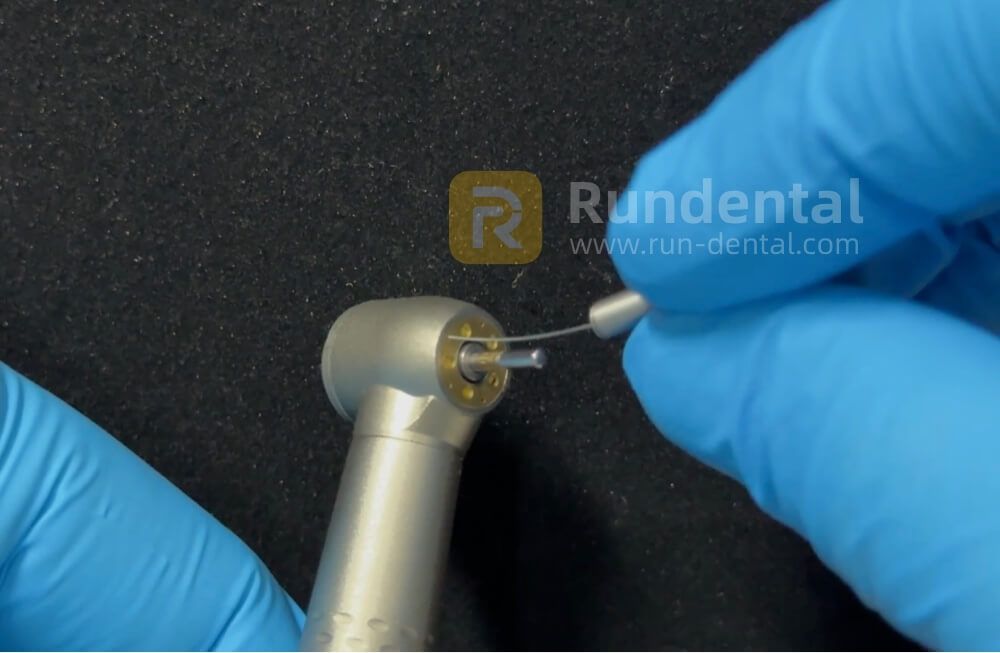
Tip: Never force a sharp tool into internal components. Clean only the passages the manufacturer tells you to.
2. Blockage After Air Polishing or Sandblasting
Residual powder from air polishing or sandblasting can drift into the dental unit pipeline, then sneak into the handpiece's air and water passages the moment you connect it.
Quick solution
Flush the dental unit pipeline for about 1–2 minutes before connecting the handpiece. Check and clean the handpiece connector and spray outlets, then carry on. That one small habit removes most of this whole category of faults. For the wider picture on keeping handpieces clean, see our guide to problems and measures in the cleaning of dental handpieces.
3. Rotation Feels Weak or Loses Power
Possible causes
- Insufficient or unstable air pressure
- Bur not correctly installed
- Dirty or worn cartridge
- Worn bearings or internal components
- Blockage restricting the air circuit
Quick solution
Check the dental unit's air pressure and the hose connection first. Remove and reinstall the bur so it's fully locked. Then clean and lubricate the handpiece. If power is still down after these basics, the cartridge likely needs inspection or replacement. Two related reads if this keeps happening: why the rotation speed of a dental handpiece decreases and a one-minute rundown on why dental handpieces don't rotate properly.
4. The Handpiece Won't Rotate at All
When the turbine stays dead, work through this order:
- Check the hose-to-handpiece connection.
- Confirm the dental unit is actually supplying drive air.
- Remove and correctly reinstall the bur.
- Clean and lubricate the handpiece.
- If it still won't rotate, stop and have the cartridge or internals checked by a qualified technician.
5. Air or Water Leakage
Possible causes
- Loose rear cap
- Loose handpiece or hose connection
- Worn or damaged O-ring
- Aging or damaged sealing components
Quick solution
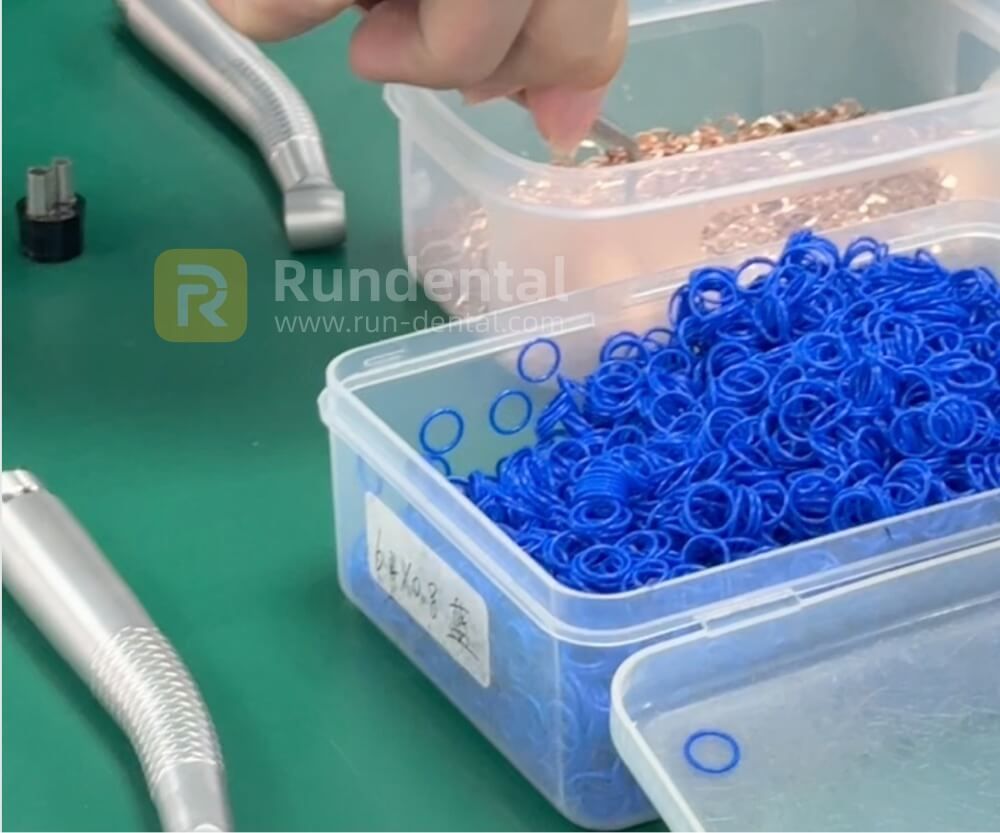
Check the handpiece connection and the rear cap. If the cap is loose, snug it up with the original wrench. If leakage continues, inspect the sealing components — a tired O-ring is a cheap, quick swap and usually the whole story.
Important: Don't keep using a handpiece with a significant leak that affects normal operation.
6. Unusual Noise During Operation
Squeaks, rattles, and grinding are the handpiece's way of complaining. Common culprits: foreign matter, dried-up lubrication, worn bearings, or a damaged cartridge.
Quick solution
Stop, check the bur and connection, and lubricate the handpiece. If the noise survives a proper clean-and-lube, the cartridge should be inspected — and a worn or damaged cartridge should be replaced, not run until failure. Worn bearings are such a common root cause that we wrote a dedicated piece on dental handpiece bearing failures: 4 problems and 18 solutions.
7. Head Overheating
Possible causes
- Insufficient cooling water
- Blocked water spray nozzle
- Insufficient lubrication
- Worn or damaged cartridge or bearing
- Operating under wrong conditions (e.g., too long at full speed without load)
Quick solution
Stop using the handpiece immediately if the head becomes unusually hot. Check the water spray and clean the spray outlets. Lubricate the handpiece. If it still overheats with normal water and proper lubrication, the cartridge and internal components need professional inspection — don't push through.
8. Bur Wobbles or Falls Out
Possible causes
- Bur not fully inserted or locked
- Dirt or debris in the chuck
- Worn chuck or clamping components
- A non-standard or off-spec bur
Quick solution
Remove the bur and inspect the chuck area. Clean the chuck, then insert a compatible standard bur and make sure it locks with a positive click. If the bur still wobbles or won't hold, stop using the handpiece and have the chuck or cartridge inspected. The mechanics behind a weak grip are explained in why a dental handpiece can't clamp the bur tightly.
Safety note: Never use a handpiece if the bur can't be locked securely — a flying bur at 300,000 rpm is not a risk worth taking.
9. Loose Rear Cap
Months of vibration or a heavy hand on the wrench can loosen the rear cap over time.
Quick solution
Stop, check the cap, and retighten it with the original special wrench. Do not overtighten — that strips the threads and creates a worse problem than the one you were fixing. If the cap keeps working loose even after correct tightening, book a professional inspection; the thread or seat may be worn.
The Daily Maintenance Checklist
Routine beats repair. Print this, put it next to the unit, and tick it daily:
- Check the water spray before treatment.
- Confirm the bur is installed and locked.
- Clean the spray nozzles regularly.
- Lubricate the handpiece at the recommended interval (for most handpieces, after every patient or at least several times a day — an oil spray adapter makes this fast, and a CleanPro-300 automatic cleaning and lubricating machine removes the guesswork entirely).
- Check the rear cap before daily use.
- Check the handpiece-to-hose connection.
- Run the recommended operating air and water pressure.
- Flush the dental unit waterline when needed, especially after air polishing or sandblasting.
- Retire any handpiece that overheats, makes serious noise, or can't hold the bur.
- Use only compatible tools, lubricants, and replacement parts.
For more on keeping units alive, our guide to regular cleaning of the cooling nozzle and light guide head covers the details.
When Professional Service Is Required
Basic troubleshooting solves most routine problems — but hand it to a professional when:
- The head runs excessively hot.
- Severe vibration or abnormal noise continues after cleaning and lubrication.
- The bur can't be locked securely.
- Air or water keeps leaking after basic checks.
- The rear cap or threads are visibly damaged.
- Rotation stays weak despite a clean, freshly lubricated handpiece.
- A cartridge or bearing needs replacement.
- Internal components need disassembly or repair.
When in doubt, stop using the handpiece rather than running it under abnormal conditions. You'll trade a small inspection for a much bigger repair bill otherwise.
For Rundental customers, our after-sales team is on hand to help with troubleshooting, maintenance guidance, and spare-part replacement. Whether you're stocking high-speed handpieces for resale or running them in your own clinic, correct operation and a few minutes of daily care will keep them spinning smoothly for years — and when you need us, we're one message away.