How to Import Dental Equipment from China: A Practical Guide (2026)
A step-by-step guide on importing dental equipment from China — covering supplier verification, payment terms, CE/FDA certifications, tariffs, shipping, and after-sales support. Expert insights from a manufacturer with 15+ years of experience.
ON THIS PAGE
- Before We Start
- Who Am I?
- Import Q&A: Dental Equipment from China
- Supplier Selection
- Payment Negotiation
- Product Confirmation
- Production Follow-up
- Freight Forwarders
- Shipping & Logistics
- After-Sales Support
- Import Timeline
- Cost Breakdown
- Certifications & Compliance
- EU (CE)
- US (FDA)
- Other Markets
- Pre-Order Checklist
- Summary
- Special Notes for Importing Dental Equipment in 2026
- 1. China-US Tariff Policy Uncertainty
- 2. China’s 2026 Import/Export Tariff Schedule Adjustment
- 3. Full Implementation of EU’s New Machinery Regulation
- 4. Global Supply Chain Diversification Trend
- Need Help?
Written by Jasmine Weng, Export Manager at Rundental. After 10+ years working with dental equipment dealers and importers from over 70 countries, I’ve put together everything I wish every new buyer knew before they started sourcing from China.
Before We Start
Over the past decade, I’ve helped hundreds of overseas clients source dental equipment from China. Some were first-time importers, others had years of experience. And here’s what I’ve noticed: 90% of the problems these clients run into tend to cluster around the same few stages — and here’s the good news — they’re all preventable.
My goal with this article is simple: help you avoid the common pitfalls so your first (or next) experience importing dental equipment from China goes smoothly.
Who Am I?
I’m Jasmine Weng, Export Manager at Rundental (Guangzhou Rundental Medical Technology Co., Ltd.).
My day-to-day work involves communicating with dental equipment dealers and importers from all over the world — from initial inquiries and technical spec confirmations, to production follow-ups, shipping, and after-sales support. I’ve handled my fair share of emergencies, and I’ve seen clients stumble because they didn’t ask the right questions early enough.
This article compiles the most common issues I’ve encountered and how to solve them. If you’re thinking about importing dental equipment from China, here’s what we’ll cover:
- Where things typically go wrong
- How to fix issues when they pop up
- How to prevent them from happening in the first place
Import Q&A: Dental Equipment from China
Supplier Selection
Supplier Reliability Checklist
This is the #1 question I get from importers. My advice: don’t go by gut feeling — use a systematic approach.
Check Their Certifications
Legitimate factories will have ISO 13485, CE, and other certifications. I can’t tell you how many times clients have asked us to help them verify certificates.
Here’s a real email from a client in Brazil (March 2024):
“I see you have a CE certificate. But my lawyer asked me to verify it. How can I check if it’s real?”
We guided him to the EU Notified Body’s official website, and he confirmed the certificate was legitimate. He later told me: “This is very important for my compliance team.”
Actually Visit the Factory (via Video)
Video factory tours are now the industry standard. Our clients usually ask to see the production lines, warehouse, and office — it tells you more than any sales pitch ever could.
Factory vs. Trading Company
My recommendation: prioritize factories with their own production capabilities. Here’s why:
What can a real factory give you?
- Problem-solving ability: They don’t just forward your issue to a production team — they can directly coordinate with R&D and engineering to solve technical problems
- New product development: They have their own R&D team and can iterate products based on market feedback, not just “you order, we make”
- Better after-sales support: They built the product, they know the specs inside and out, and they can give you accurate technical support fast
Trading companies, by contrast, are more like middlemen — they aggregate products but don’t have deep technical knowledge. When something goes wrong, they often have to relay information back to the factory anyway, which slows everything down.
That said, factories aren’t always the better choice. If a factory’s sales team is slow to respond, has language barriers, or doesn’t carry the product lines you need, a trading company is a reasonable alternative.
Bottom line: When evaluating suppliers, look at whether you can directly reach their technical team, not just sales.
Handling High MOQ
Almost every new client runs into this. Dental equipment typically has higher minimum order quantities than consumer goods — phone accessories might have an MOQ of 100 pieces, but a dental turbine handpiece might be 100 units.
Here’s my approach:
1. Understand why the MOQ is high
Common reasons:
- Components need to be sourced in bulk (like specific bearing models)
- Packaging materials need custom printing
- Custom patterns or designs
- Custom new-function products
2. Try negotiating
Many of our clients have successfully negotiated lower MOQs — start with a small trial order to test the market, then scale up once you have confidence.
3. Ask about split shipments
If the MOQ is 50 but you only need 30, ask if the supplier can ship in two batches — 30 first, then 20 a month later.
Virtual Factory Verification
Video factory tours are now standard practice — clients inspect production lines, warehouses, and offices via live stream or recorded video. It’s efficient and cost-effective. If a supplier won’t even do a video tour, that’s a red flag in itself.
Another effective approach: Ask the supplier for contact information of their regional distributors. You can reach out directly to verify — how professional is their partnership? What’s the product quality like? How’s the after-sales service? This is far more convincing than any self-promotion.
Payment Negotiation
T/T vs. L/C Payment Methods
This is the most common payment negotiation question. My suggestion: choose based on order size and your relationship stage.
| Order Size | Recommended Payment Terms |
|---|---|
| Small (under $5,000) | 100% T/T (pay before shipment) |
| Medium ($5,000–$30,000) | 30% deposit + 70% before shipment |
| Large (over $30,000) | 30% deposit + 70% against B/L copy, or consider L/C |
Recommendations:
- Small orders: 100% T/T is fine — L/C bank fees might actually exceed your order value
- Long-term clients: Negotiate more flexible terms
- First-time orders with a new supplier: Use safer payment methods to build trust
Reducing Deposit Risk
This is a very common concern for new clients. I get it — once you wire money, you’ve lost leverage.
Ways to reduce deposit risk:
- Ask for the company’s registration documents and verify them through official channels yourself
- Ask for references from past clients (with supplier’s permission)
- Use staged payments — pay in phases as each milestone is completed
Supplier Trust Verification
This is the biggest fear for new clients. My advice: use data and verification methods to ease concerns, not empty promises.
Here’s an actual email exchange with a UK client (April 2024):
“I am very nervous about wire transfer. What if you disappear after receiving my payment?”
Our response:
“I understand this is a big concern for first-time cooperation. Here are some verification steps you can take:
- Ask us for a video tour of our office and factory
- Ask for contact information of 2-3 of our existing overseas clients for reference
We have been in this business for 10 years. Our reputation is everything. We will not risk that for one order.”
That client verified our information and even contacted the references we provided. Three months later, he wrote: “Jasmine, thank you for being patient. After verification, I feel much more comfortable. Placing order now.”
Product Confirmation
Bulk Order vs. Sample Quality
This is one of the most common issues in dental equipment imports. I’ve handled more of these cases than I can count.
Why does this happen?
- Samples use premium materials; bulk orders use cheaper alternatives
- Samples get careful inspection; bulk orders are spot-checked
- Small batches and large batches have different production processes
How to prevent it?
1. Define clear standards during the sample stage
We provide clients with a detailed specification sheet during sampling — every parameter gets signed off on.
2. Confirm a “golden sample” before mass production
A golden sample is the standard for mass production — bulk orders must match it exactly. If a supplier can’t provide golden sample confirmation, that’s a major red flag.
3. Include quality clauses in your contract
Specify quality standards, inspection methods, how defective products are handled, and compensation terms.
Technical Specs Translation
Dental equipment has precise technical parameters — rotation speed, torque, noise levels, water pressure tolerances. No room for ambiguity. But many trading companies have sales teams that don’t fully understand the products themselves, leading to vague answers and products that don’t meet expectations.
The fix: Insist on direct access to the technical team. Before placing a firm order, ask the supplier to arrange an engineer or technical supervisor for the discussion. Make sure someone who actually knows the product is confirming specs — not just a salesperson relaying messages. The more technical questions you ask, the better you can gauge the supplier’s expertise.
OEM Logo & Packaging Issues
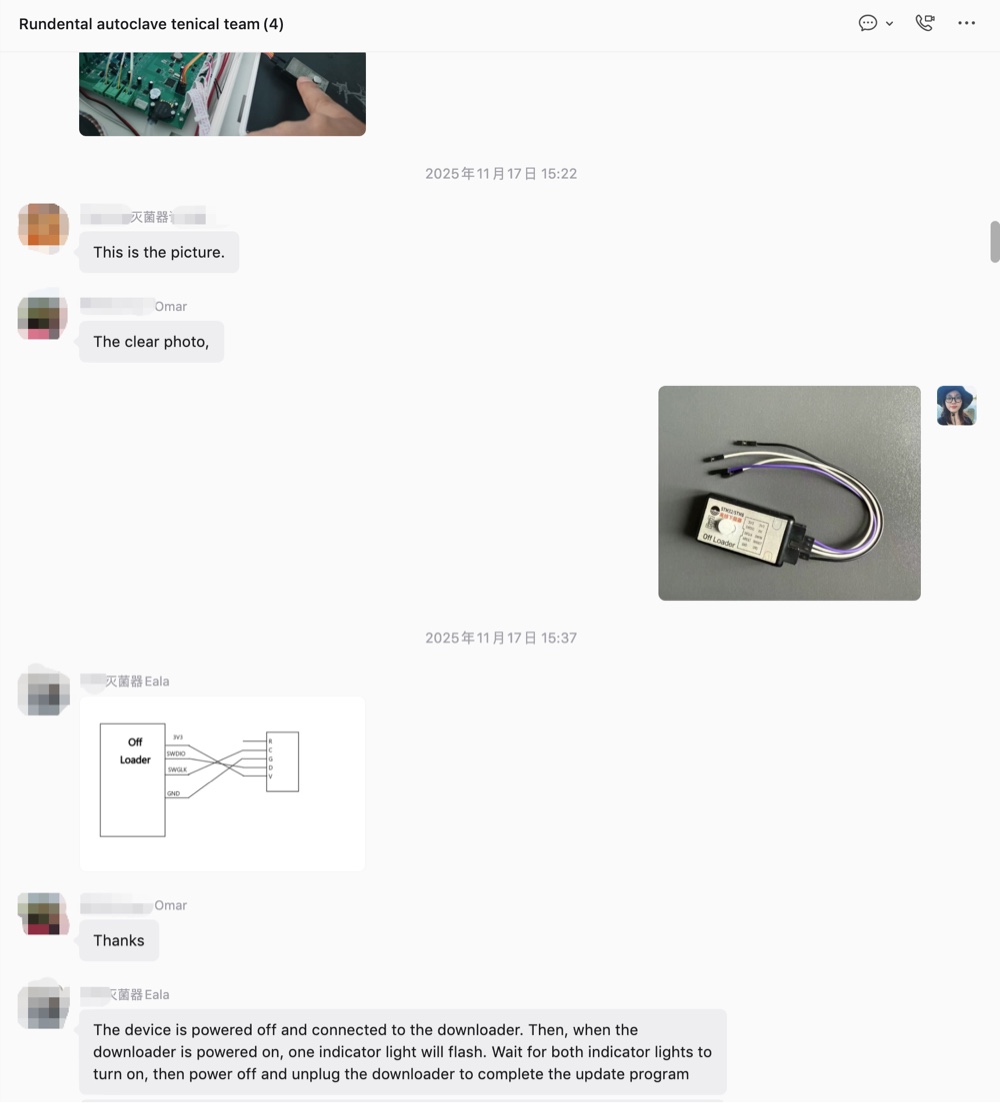
OEM customization (logos, colors, packaging) is a common need for dental equipment importers — but this stage has a high error rate. I’ve seen design confirmation mistakes, wrong production files used, logo positioning off by millimeters.
Prevention: Confirm at every stage:
- Get design drafts confirmed in writing
- Request real photos before production starts
- Do a small trial run first — confirm it’s right, then scale up
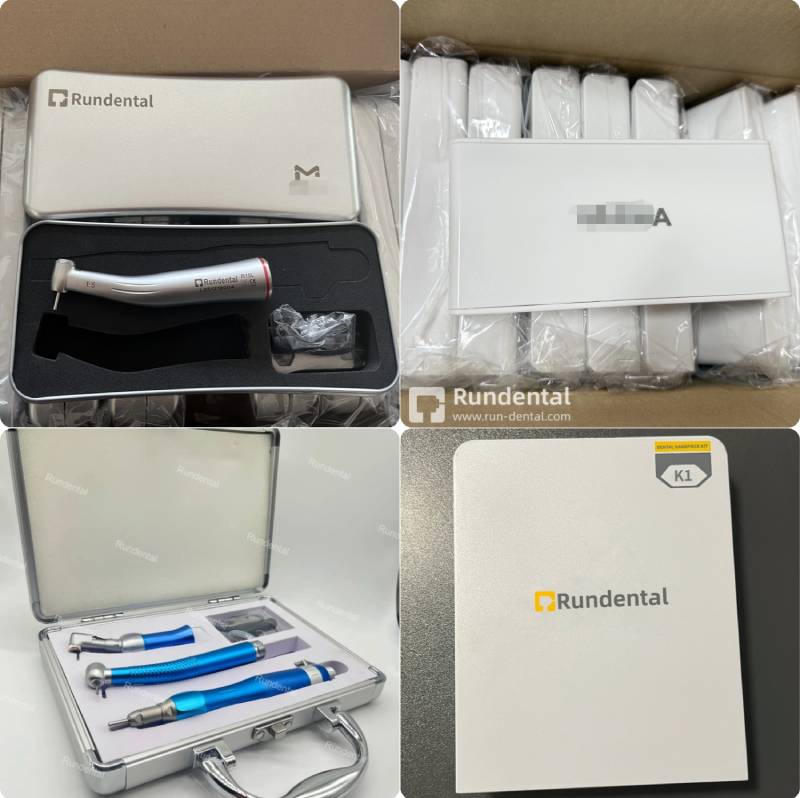
I have a separate article on OEM customization tips if you want more detail.
Production Follow-up
Handling Delivery Delays
This is the most common complaint I hear. In my experience, most delays aren’t about supplier capability — they’re about communication and management.
Common causes:
- Raw material delays (especially imported bearings)
- Order scheduling pushed back
- Quality issues requiring rework
- Holiday interruptions
How to handle them:
1. Add buffer time when confirming delivery dates
I always advise clients to add 2–3 days of buffer, especially for orders tied to dental shows. If you need goods before a June 15th show, place your order by April 15th.
Here’s an actual email exchange with a US client (February 2024):
“Jasmine, I need the goods to arrive before June 15th for a dental show. When should I place order?”
Our response:
“To ensure your goods arrive on time, I recommend placing order by April 15th. This gives us:
- 2 weeks for production
- 1 week for quality inspection
- 3–4 weeks for shipping (sea freight to US west coast)
If any unexpected delay happens, we still have buffer time.”
2. Request regular progress updates
Don’t wait until shipping day to check in. We send clients weekly updates, sometimes daily when needed:
“Week 4 update:
- Materials: 100% arrived
- Production: 80% complete
- Current stage: Assembly
- Estimated completion: Within schedule
- Photo attached: production floor”
3. Set up early warning systems
If a delay is coming, notify the client as early as possible so they can adjust plans. Don’t wait until shipping day to say “sorry, we need more time.”
Production Progress Visibility
Clients often ask: “Where’s my order right now?”
The best solution is a visual production tracking system.
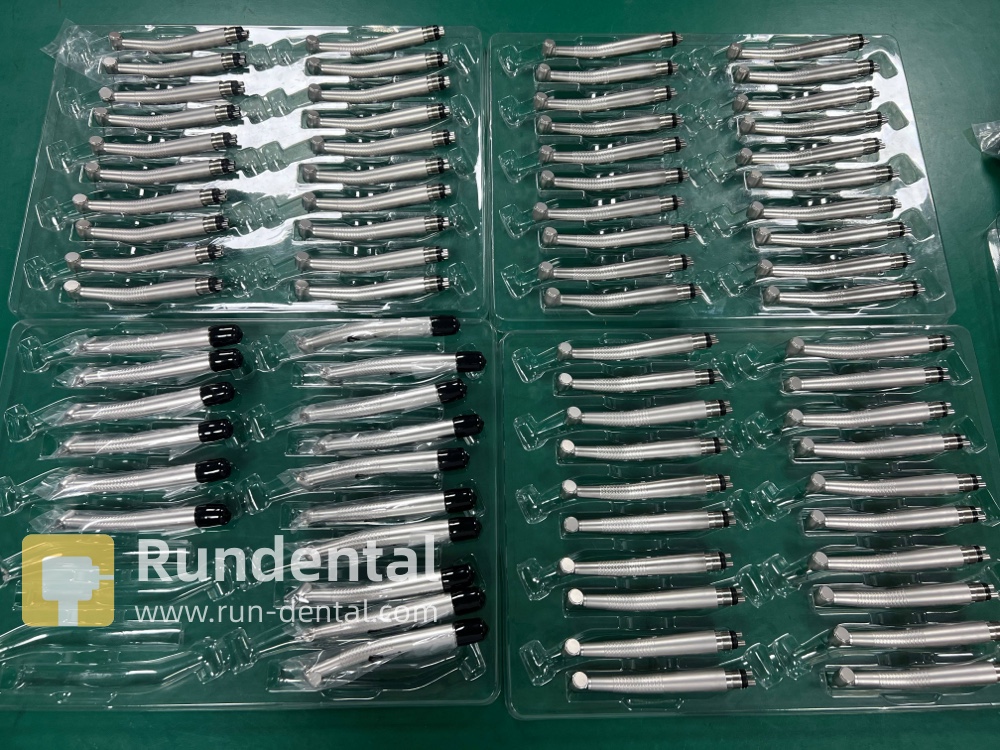
We provide clients with weekly production progress photos, key milestone videos (material arrival, assembly start, testing completion), and real-time progress tracking.
Freight Forwarders
Choosing a Freight Forwarder
Choosing a freight forwarder is just as important as choosing a supplier. A good one makes everything easier.
Key criteria:
- Industry experience: Do they understand dental equipment customs clearance requirements?
- Network coverage: Do they have their own agent network at the destination?
- Response time: How quickly do they respond to inquiries?
- Price transparency: Is their quote detailed, or are there hidden fees?
Understanding Freight Quotes
Big differences in freight quotes are normal. Factors include:
- Route (direct vs. transshipment)
- Shipping line (different carriers have very different rates)
- Peak/off-peak season
- Bunker surcharges
Tip: Ask for a detailed cost breakdown — know exactly what’s included and what might be charged separately.
Avoiding Customs Document Errors
Customs documents are critical for dental equipment imports. Any error — incorrect product descriptions, wrong HS codes, mismatched packing lists — can cause customs delays.
Lesson: Before shipping, have both the supplier and freight forwarder jointly review all customs documents, especially for first-time imports.
Managing Extra Fees
Many clients discover additional charges after arrival — document fees, manifest fees, customs brokerage, clearance service fees, etc.
Tip: Ask about all potential fees during the quote stage.
Shipping & Logistics
Customs Clearance Issues
Dental equipment requires special certifications for clearance in many countries. Common issues:
Problem 1: Missing certifications Many countries have strict market access requirements for dental equipment:
- EU: CE certification (MDD/MDR)
- US: FDA 510(k)
- Australia: TGA registration
- Brazil: ANVISA registration
Problem 2: Incorrect product descriptions Product descriptions must be accurate. I’ve seen clients have goods seized because they wrote “dental handpiece” as simply “instrument.”
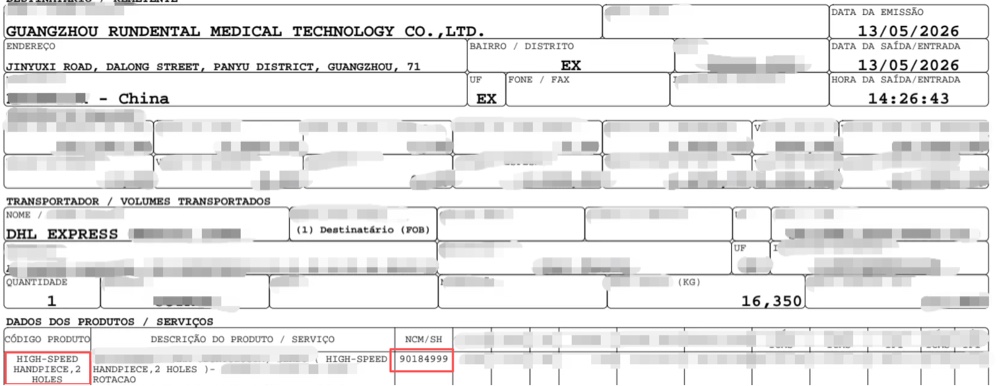
Problem 3: Customs value disputes Customs has the right to verify declared values. If your declared value is too low, customs may reappraise — or fine you.
2026 Special Note: With the China-US tariff situation, US customs has increased scrutiny on imports. Make sure all declarations are accurate and keep complete trade documentation on hand for customs review.
Transit Damage Prevention
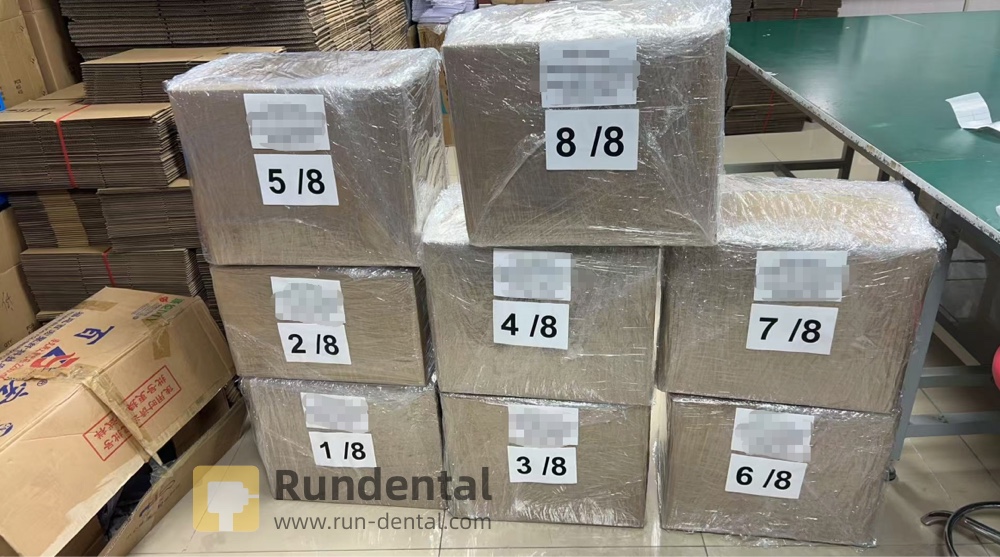
Marine shipping damage is common. Dental equipment, being precision machinery, needs extra protection.
Preventive measures:
- Require packaging suitable for ocean freight (standard export cartons + moisture protection)
- Reinforce containers to prevent shifting
- Purchase transport insurance (marine cargo insurance)
After-Sales Support
Parts Supply Stability
Many dental equipment dealers find that when they need to order parts (bearings, O-rings, etc.), the supplier’s response is slow.
Tip: Confirm parts supply capability during initial procurement discussions.
We provide parts price lists with quotes, including:
- Stock status of common parts
- Lead time for custom parts
- Minimum order quantities
Here’s a WhatsApp exchange with a Spanish client (April 2024):
“Jasmine, I need replacement bearings for my order from last year. Can you ship 20 sets?”
Our response:
“Of course! We keep common bearings in stock. For 20 sets:
- Lead time: 3–5 days
- Shipping: We can use DHL (5–7 days) or sea freight (3–4 weeks)
- Cost: $15 per set for this quantity
Which shipping method do you prefer?”
After-Sales Response Time
Slow after-sales responses usually come from two causes:
- Time zone differences (China-Europe)
- Vague problem descriptions, leading to back-and-forth clarification
Improvement tips:
- Use instant messaging tools like WhatsApp (faster than email)
- Describe problems in detail, attach photos or videos
- Confirm time zones and find times that work for both parties
Here’s a WhatsApp exchange with an Argentine client (March 2024):
“Jasmine, my handpiece has a strange noise. Video attached. What should I do?”
Our response (within 2 hours):
“I watched the video. This might be a bearing issue. Could you tell me:
- How long has this handpiece been in use?
- Has it been dropped or exposed to water recently?
Based on your description, we can offer two options: 1. Replace the bearing (will need to send it back) 2. If the problem is serious, we can offer an exchange program”
Import Timeline
Here’s a typical timeline from contract signing to delivery (using Rundental’s dental handpiece shipped by express as an example):
| Stage | Time Required |
|---|---|
| Inquiry and spec confirmation | 1–2 weeks |
| Contract signing and payment | 1–3 days |
| Sample confirmation (if needed) | 1–2 days |
| Production | 5–7 days |
| Quality inspection and packaging | 1 day |
| Packing and shipment | 1 day |
| Express shipping | 3–7 days (depends on destination) |
| Customs clearance | 1–3 days (normal cases) |
| Delivery | 1–2 days |
Total: approximately 4–5 weeks (excluding extra time for sample confirmation)
Cost Breakdown
Importing dental equipment from China involves more than just the product cost. Here’s a general cost breakdown:
| Cost Item | Notes | Typical % |
|---|---|---|
| Product cost | Base purchase cost | Base |
| Domestic transport | Factory to port | 1–2% |
| Export customs | Customs fees | 0.5–1% |
| International shipping | Sea/air freight | 10–30% |
| Insurance | Marine cargo (0.1–0.3% of value) | 0.1–0.3% |
| Tariffs | Varies by country; China-US tariffs have significantly increased US-bound costs | 0–15% (non-US); 50%+ (US market) |
| Customs clearance | Customs broker fees | 0.5–1% |
| Port fees | Destination port charges | 0.5–1% |
| VAT | Varies by country | 0–20% |
| Delivery | Port to warehouse | 1–2% |
Tip: Add a 20–30% buffer on top of your product cost. For US-bound shipments, I’d recommend 30–40% to account for tariff volatility.
Related References:
- China Import/Export Tariff Schedule (2026) Announcement — Effective January 1, 2026
- US FDA 510(k) Database — Verify US market access certification
Certifications & Compliance
Certifications are the gateway to your target market. Here’s what major markets require:
EU (CE)
- Dental equipment falls under medical devices and must comply with MDR (EU 2017/745)
- Certification bodies: Notified Bodies
- How to verify: Visit the NANDO database (nando.newapproach.org), enter the Notified Body number and certificate number
2026 Regulatory Update: Starting January 1, 2026, the EU’s new Machinery Regulation (EU) 2023/1230 is fully in effect, replacing the old Machinery Directive 2006/42/EC. Dental equipment exported to the EU must confirm that product CE certification has been updated under the new regulation.
Reference:
US (FDA)
- Dental handpieces typically require 510(k) clearance
- How to verify: Visit the FDA 510(k) database (accessdata.fda.gov), enter the 510(k) number
2026 Tariff Policy Reminder: The China-US tariff situation has significantly increased costs for exports to the US. In April 2025, the US imposed an additional 34% tariff on Chinese goods, bringing total tariffs on dental equipment to 54%. After policy adjustments following February 2026, additional tariffs on China are now around 10% (with some products still at 50%+ when combined with existing tariffs). Recommendations for US-bound importers:
- Include price adjustment clauses in contracts to handle tariff rate changes
- Reserve 30–40% cost buffer
- Follow developments on US Supreme Court tariff rulings
References:
Other Markets
- Australia: TGA (Therapeutic Goods Administration)
- Brazil: ANVISA
- Canada: Health Canada
- Japan: PMDA
Pre-Order Checklist
Before placing a firm order, use this checklist to systematically evaluate your supplier:
Company Credentials
- [ ] Business license is genuine and valid
- [ ] Has actual production facilities (not just a trading company)
- [ ] Has ISO 13485 or equivalent quality management system certification
- [ ] Has experience exporting to your target country
Product Capabilities
- [ ] Products have required certifications for your market (CE/FDA, etc.)
- [ ] Can provide samples for testing
- [ ] Capable of producing products to your specifications
- [ ] Responsive on customization (logos, packaging, etc.)
Communication and Response
- [ ] Email/message response time is reasonable (within 24–48 hours)
- [ ] Technical questions are answered professionally
- [ ] No language barriers in communication
Payment and Risk
- [ ] Payment terms are flexible and negotiable
- [ ] Can provide installment payment options
Service and Support
- [ ] Has after-sales support channels
- [ ] Parts supply is guaranteed
- [ ] Can accommodate third-party inspections
Policy and Risk Assessment (2026 Priorities)
- [ ] Assessed tariff policy impact for destination country (especially US market)
- [ ] Supplier has mechanisms to handle tariff rate changes (e.g., price adjustment clauses)
- [ ] Supply chain stability (do they have diversified production layout?)
- [ ] Has contingency plans for exchange rate volatility
Summary
The core of importing dental equipment from China is establishing the right cooperation framework and risk management awareness.
Key takeaways:
- Choosing a supplier is the first step: Don’t rush to place an order — take time to verify the supplier’s credentials and reliability
- Clarify payment terms: Find payment terms that work for both sides and build trust
- Communicate transparently: Clear confirmation at every stage prevents misunderstandings
- Inspect thoroughly: Sample confirmation, pre-shipment inspection, arrival inspection — don’t skip any
- Use professional logistics: Choose a reliable freight forwarder and understand customs requirements upfront
Dental equipment is a long-term business. Building stable supply chain relationships matters more than short-term price advantages.
Special Notes for Importing Dental Equipment in 2026
1. China-US Tariff Policy Uncertainty
In April 2025, the US announced additional 34% tariffs on Chinese goods, with dental equipment on the list bringing total tariffs to 54%. After the US Supreme Court ruling in February 2026 that IEEPA-based tariffs were unconstitutional, policy was adjusted — additional tariffs on China are now around 10% (with some products still at 50%+ when combined with existing tariffs).
Impact on importers:
- Significantly increased costs for US-bound shipments — need to reevaluate pricing strategy
- Supply chain “de-risking” is accelerating; alternative production bases in Southeast Asia are getting attention
- Some Chinese companies are setting up facilities in Mexico and Vietnam to circumvent tariffs
Recommendations:
- Include price adjustment clauses in contracts with US suppliers to handle tariff rate changes
- Reserve 30-40% cost buffer to account for tariff volatility
- Consider diversifying supply sources to avoid over-reliance on a single market
References:
- Tariff War: China’s Dental Industry Cost Survival Challenge
- Under the Tariff Storm, China’s Dental Export Path Is Being Reshuffled
- CITIC Securities: Analysis of Recent US Tariff Policy Volatility Impact on China’s Exports
2. China’s 2026 Import/Export Tariff Schedule Adjustment
Starting January 1, 2026, the “Import/Export Tariff Schedule of the People’s Republic of China (2026)” is officially in effect. Key changes:
- Lowered import tariffs on some medical products (artificial blood vessels, diagnostic reagent kits, etc.)
- Canceled temporary import tariff rates on micro motors and other goods
- Restored most-favored-nation tariff rates
Reference: State Taxation Commission Announces Import/Export Tariff Schedule (2026)
3. Full Implementation of EU’s New Machinery Regulation
Starting January 1, 2026, the EU’s new Machinery Regulation (EU) 2023/1230 is fully in effect, replacing the old Machinery Directive 2006/42/EC that has been in use for nearly 20 years.
Key changes:
- Expanded scope — substantial changes to requirements for machinery exported to the EU
- Updated CE certification processes and requirements
- Dental equipment and other medical devices need to confirm compliance with the new regulation
Recommendation: When working with EU suppliers, confirm their product CE certification has been updated under the new regulation to avoid customs clearance issues.
4. Global Supply Chain Diversification Trend
China-US trade friction is driving a global dental equipment supply chain restructuring:
- Chinese companies are accelerating overseas expansion (Southeast Asia, Mexico)
- Importers are seeking supply source diversification to reduce single-source risk
- “Nearshoring” is becoming a emerging trend
Recommendation: When evaluating suppliers, beyond just price and quality, also assess their supply chain stability and ability to handle geopolitical risks.
Need Help?
If you’re considering importing dental equipment from China, or if you have any questions about this article, feel free to reach out. We offer:
- Free product consultation and solution recommendations
- Sample services
- OEM/ODM customization
- Global logistics coordination
This article is based on Rundental’s 10+ years of industry experience. Please credit Rundental if sharing.